

 ENG
ENG- KI-Beschleunigung
- Branchen
- Finanzen
Nearshore-Softwareentwicklung für den Finanzsektor – sicher, skalierbar und Compliance-gerechte Lösungen für Banking, Zahlungsverkehr und APIs.
- Einzelhandel
Softwareentwicklung für den Einzelhandel – E-Commerce, Kassensysteme, Logistik und KI-gestützte Personalisierung durch unsere Nearshore-Engineering-Teams.
- Verarbeitende Industrie
Nearshore-Softwareentwicklung für die Industrie – ERP-Systeme, IoT-Plattformen und Automatisierungstools zur Optimierung industrieller Abläufe.
- Finanzen
- Was wir tun
- Dienstleistungen
- Technologien
- Collaboration models
- Kooperationsmodelle
Kooperationsmodelle passend zu Ihren Bedürfnissen: Komplette Nearshoring Teams, deutschsprachige Experten vor Ort mit Nearshoring-Teams oder gemischte Teams mit unseren Partnern.
- Arbeitsweise
Durch enge Zusammenarbeit mit Ihrem Unternehmen schaffen wir maßgeschneiderte Lösungen, die auf Ihre Anforderungen abgestimmt sind und zu nachhaltigen Ergebnissen führen.
- Kooperationsmodelle
- Über uns
- Wer wir sind
Wir sind ein Full-Service Nearshoring-Anbieter für digitale Softwareprodukte, ein perfekter Partner mit deutschsprachigen Experten vor Ort, Ihre Business-Anforderungen stets im Blick
- Unser Team
Das ProductDock Team ist mit modernen Technologien und Tools vertraut und setzt seit 15 Jahren zusammen mit namhaften Firmen erfolgreiche Projekte um.
- Wozu Nearshoring
Wir kombinieren Nearshore- und Fachwissen vor Ort, um Sie während Ihrer gesamten digitalen Produktreise optimal zu unterstützen. Lassen Sie uns Ihr Business gemeinsam auf das nächste digitale Level anheben.
- Wer wir sind
- Unser Leistungen
- Karriere
- Arbeiten bei ProductDock
Unser Fokus liegt auf der Förderung von Teamarbeit, Kreativität und Empowerment innerhalb unseres Teams von über 120 talentierten Tech-Experten.
- Offene Stellen
Begeistert es dich, an spannenden Projekten mitzuwirken und zu sehen, wie dein Einsatz zu erfolgreichen Ergebnissen führt? Dann bist du bei uns richtig.
- Info Guide für Kandidaten
Wie suchen wir unsere Crew-Mitglieder aus? Wir sehen dich als Teil unserer Crew und erklären gerne unseren Auswahlprozess.
- Praktikum im Anfänger-Bootcamp
Starte deine IT-Karriere mit dem Rookie Boot Camp, unserem bezahlten Praktikumsprogramm, in dem Studenten und Absolventen Fähigkeiten aufbauen, Selbstvertrauen gewinnen und praktische Erfahrungen sammeln.
- Arbeiten bei ProductDock
- Newsroom
- News
Folgen Sie unseren neuesten Updates und Veröffentlichungen, damit Sie stets über die aktuellsten Entwicklungen von ProductDock informiert sind.
- Events
Vertiefen Sie Ihr Wissen, indem Sie sich mit Gleichgesinnten vernetzen und an unseren nächsten Veranstaltungen Erfahrungen mit Experten austauschen.
- News
- Blog
- Kontakt

06. Juli 2026 •4 minutes read
Modern software solutions for the sustainable banking sector
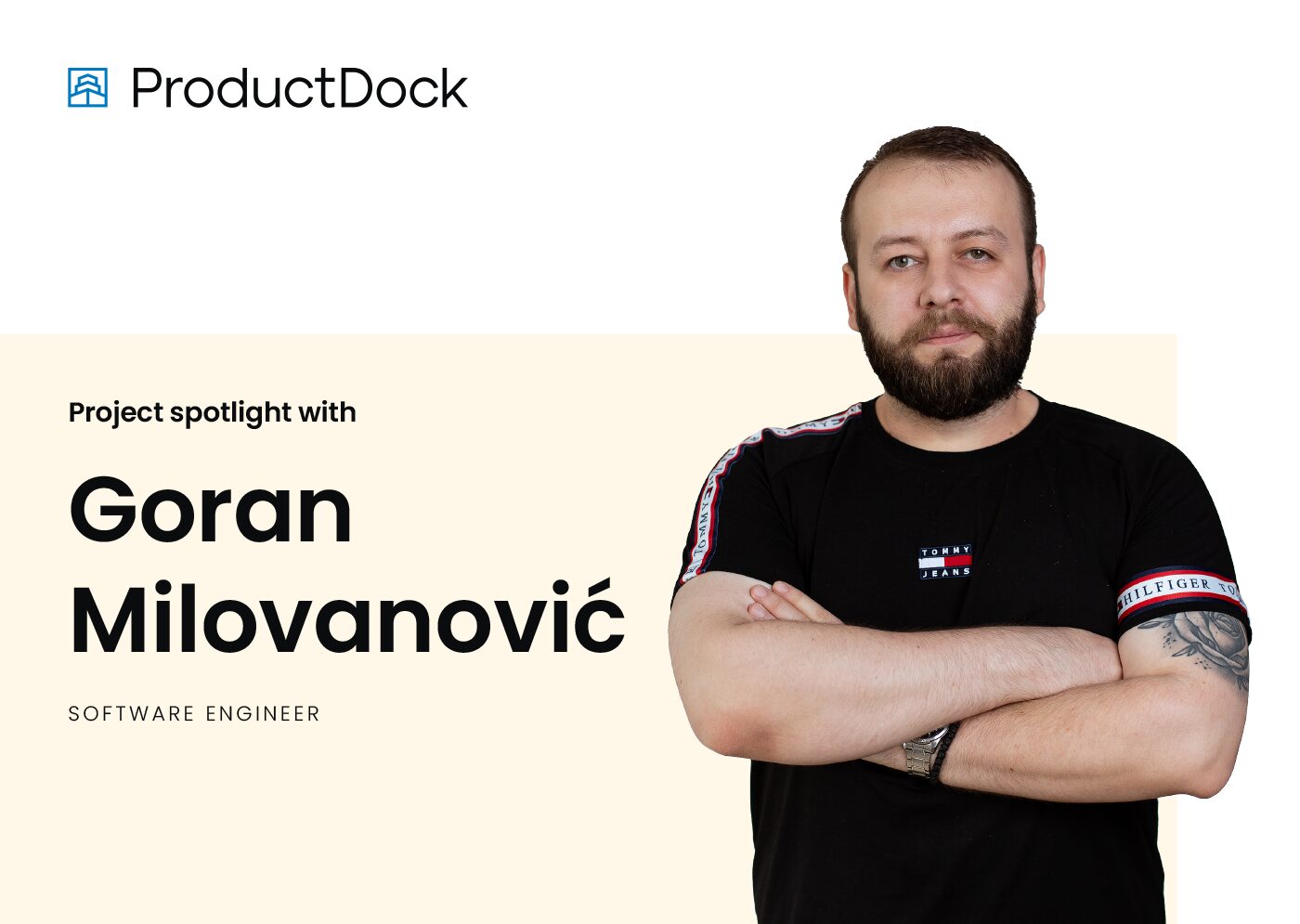
We had a talk with Goran Milovanovic, one of our front-end developers from Doboj. Goran’s team started working for our client, BMS, in May 2023 on a sustainability topic which encompasses several topics, first of which was the development of the Environmental, Social, and Governance (ESG) calculator.
The ESG calculator is now in its final phase, and will soon be handed off to a new team for further maintenance. In parallel, the team has also started work on a second project: the CO2 footprint calculator. Both these calculators are part of the client’s Sustainability Overview page, and Goran’s team is one of the teams responsible for its development and maintenance.
Tell us about your projects and how it all started
The story begins in May 2023, when we started working for the client on the ESG calculator. Back then, the team consisted of four of us, Mirko Novakovic and I on the frontend, and the other two backend guys, who were from another vendor working for BMS. We were given a bit of a short deadline, October ‘23, with the client’s motivation for this product being the then-new EU legal regulation that required banks to implement this kind of tool by the following year.
We made the tool from scratch and delivered it on time, resulting in a very positive reaction from the client. The client later admitted to being, in a way, surprised and to not even being sure that could be done in such a short period, especially considering we had certain issues within the team which the client acknowledged and acted promptly.The ESG calculator is a question-based module that provides clients with an ESG score upon completing a structured set of questions. The original tool we made was useful, but the client also needed to print the questions and convert them to PDFs, which is why we then implemented a service to create PDFs for them and continued adding features based on feedback from the bank.
Then, at the start of 2024, Mirko and I were joined by team members from another sustainability project, called CO2 footprint calculator. Together, as a new team we continued working on ESG, adding new features, but we also took on the development of the existing CO2 calculator—a tool originally created by the team we merged with. This decision for merger came after the client observed low usage of the CO2 tool by bankers, likely due to the absence of essential features. As a result, the team is now focused on modernizing the widget and reintroducing key features that will enhance its usefulness for bank consultants.
What do you like the most about this project?
It would probably be the usefulness of the tool we’ve made. In 2024, BMS reported that the ESG widget was one of the most used tools, saying that bankers use it daily because they get significant value from it.
What about the CO2 calculator and its value to the client?
As mentioned, with our work on the ESG almost done, the client tasked us with salvaging and redesigning the existing CO2 calculator (part of the tool is now integrated into the ESG tool), which hasn’t been used much by the consultants. A possible reason for the lack of use of this tool may be that the preparation when this tool was developed wasn’t as thorough, and the legal side may not have been as strict as with ESG.
We are now redesigning the CO2 tool, and what we can see is that the new design is modern and up to date, but the tool remains complex to use and has many intricate options that no one from BMS has encountered before. The client doesn’t still actually know what to do with this tool, so we wait to see if the improved version can bring value to the consultants.
Tell us about the team structure
The team currently consists of two frontend developers, Mirko and me, along with three backend developers from another vendor working for BMS. Additional roles include a QA, a Product Owner, and a Scrum Master, all from BMS. We also have a BMS Business Analyst who liaises directly with the bank’s representatives and ensures that the tool we are redesigning aligns with their needs. We follow the Scrum framework and meet daily, which makes communication easy and efficient.
Could you think of a moment on the project you were really proud of?
As time goes by, you forget small things, but what, for example, stayed with me was the moment when we delivered the original project in time, back in October 2023. The part I was really proud of was not even that we had managed to finish it in time, but the moment when the client shared that they had internal debates about whether the deadline was even possible.
In the end, could you tell us about some specifics related only to this project?
It would definitely be a great cooperation both within the team and with the client, which was established from the very beginning. Mirko and I have been working together on this project from the start. As this was my first Angular project, his guidance has been invaluable, and I have learned a great deal from him, and we’ve always gotten along well.
As for our cooperation with the client, I can say that our relationship is one of mutual respect. We appreciate that they value us, actively listen to our recommendations, and act on them when necessary. All in all, BMS has a great company culture where, instead of just giving orders, they encourage everyone to share their opinions and ensure every voice is heard.